
Views: 0 Author: Site Editor Publish Time: 2026-11-21 Origin: Site


Specifying the wrong valve pressure class creates a massive dual-sided risk for industrial piping systems. Under-engineering leads to catastrophic failure and strict compliance breaches. Conversely, over-engineering silently inflates your initial capital expenditure (CAPEX). In these complex environments, a "Class" designation is never a fixed performance guarantee. It serves merely as a nominal reference point. You must cross-reference this baseline against precise material and temperature parameters to determine safe operating limits. Relying solely on the class number invites severe safety hazards and costly operational downtime.
This guide breaks down how to accurately evaluate pressure classes. We will help you navigate overlapping global standards effectively. You will learn how to ensure the valve you source matches the exact physical realities of your piping system.
Valve pressure class is nominal, not absolute: A "Class 300" valve does not mean it is rated for 300 PSI; actual working pressure relies on a Pressure-Temperature (P-T) curve.
Temperature degrades pressure capacity: As media temperature rises, the maximum allowable working pressure of any valve or flange decreases.
Material dictates the rating curve: Different materials (e.g., carbon steel vs. stainless steel) within the same pressure class will have entirely different pressure limits at elevated temperatures.
Standardization ensures interoperability: Adhering to ASME B16.34 (valves) and B16.5 (flanges) guarantees that piping components mate correctly and withstand specified system stresses.
A valve pressure class (e.g., Class 150, 300, 600) acts as a standardized classification system. It determines the structural wall thickness and flange dimensions required to safely contain internal pressure. You cannot treat this designation as a direct pressure limit. Instead, it defines the physical geometry of the component. This geometry ensures the valve body can handle specific mechanical stresses under varied operating conditions.
Engineers often default to a higher pressure class "just to be safe." This habit exponentially increases valve weight, physical footprint, and overall procurement costs. A Class 600 valve requires significantly more raw metal than a Class 150 valve. This added mass requires stronger pipe supports and heavier lifting equipment during installation. You will also spend more on freight and specialized labor. Over-specifying drains your capital expenditure without delivering actionable engineering benefits.
Selecting components without consulting the correct standards invites serious operational trouble. You risk fugitive emissions and hazardous blowout incidents. Facility managers also face failure to meet strict insurance or regulatory (OSHA/EPA) compliance. Inspectors actively look for mismatched ratings during site audits. A single under-rated component in a high-pressure line compromises the safety rating of the entire facility.
Flanges and valves must share the exact same class to bolt together. Mismatched classes compromise the gasket seal and destroy structural integrity. You cannot safely force a connection between differing classes. The bolt circles will not align, and the flange thicknesses will vary. Attempting to bypass this rule guarantees immediate leak paths and violates every major piping code.
Global supply chains force procurement teams to navigate multiple regional standards. Misunderstanding these frameworks leads to unusable inventory. We must break down the three primary systems governing industrial piping.
The American Society of Mechanical Engineers governs these specifications primarily through two codes. ASME B16.34 covers flanged, threaded, and welding end valves. ASME B16.5 covers pipe flanges and flanged fittings. They categorize components into specific classes: 150, 300, 400, 600, 900, 1500, and 2500. This system heavily influences the global oil, gas, and petrochemical sectors.
European standards base their ratings on nominal pressure in bars at room temperature. For example, PN16 indicates a 16 bar pressure rating at ambient conditions.
Evaluation Check: PN and ASME classes do not align perfectly. Do not attempt direct 1:1 bolting between ANSI and PN standards. The bolt hole patterns and flange face dimensions differ significantly. You must use transition spools or specialized adapters to cross these standards safely.
The JIS system classifies components by "K" ratings, such as 10K or 20K. This standard dominates the marine industry and facilities built by Japanese engineering firms.
Procurement risk: Using a 10K flange against a Class 150 flange will result in bolt hole misalignment and guaranteed leak paths. Always verify the standard origin before finalizing your purchase orders.
Global Valve Standard Comparison Overview
Standard System | Primary Region | Rating Format | Key Governing Body |
|---|---|---|---|
ASME / ANSI | North America / Global Oil & Gas | Class (150, 300, 600, etc.) | American Society of Mechanical Engineers |
PN / EN (DIN) | Europe / Global Water Systems | Nominal Pressure in Bar (PN16, PN40) | European Committee for Standardization |
JIS | Japan / Asia Pacific / Marine | K Rating (10K, 20K) | Japanese Industrial Standards Committee |
The most common engineering mistake involves treating the "Class" number as the maximum PSI. The class acts as a reference, not an absolute limit. For example, a Class 150 carbon steel valve is actually rated for roughly 285 PSI at ambient temperatures. However, this capacity drops to 0 PSI near 1000°F. You must read the Pressure-Temperature (P-T) curve to find the safe operating window.
The actual pressure rating ties strictly to the metallurgical properties of the valve body. Different alloys lose tensile strength at different rates when exposed to heat. Carbon steel behaves differently than austenitic stainless steel or duplex alloys.
Evaluation Example: A 300LB Stainless Steel Flange Ball Valve and a 300LB Cast Steel Gate Valve will have different maximum pressure limits at 500°F. Stainless steel and carbon/cast steel follow entirely different strength-degradation curves under heat. Stainless steel generally maintains excellent low-temperature toughness but drops off differently at mid-range elevated temperatures compared to standard cast steel.
Manufacturers sometimes use acronyms like CWP (Cold Working Pressure) or WOG (Water, Oil, Gas). These are ambient temperature metrics. They represent the maximum non-shock pressure the component handles at room temperature. They do not replace the need to check ASME B16.34 charts for high-temperature applications. If your media exceeds 100°F, you must abandon CWP ratings and consult the formal P-T tables.
Different valve body designs handle high-pressure classes differently. You must align the internal mechanical architecture to the stresses of your specific piping class. A design that works flawlessly at Class 150 may fail catastrophically at Class 900.
Linear motion valves excel in demanding applications. A Cast Steel Gate Valve is typically preferred in Class 300 to Class 2500 applications. It provides reliable on/off isolation in extreme environments. The solid wedge design cuts through high-pressure media effectively.
Conversely, a Cast Steel Globe Valve is selected when flow throttling is required alongside high-pressure containment. The internal baffle forces the fluid to change direction. This allows precise flow control. Keep in mind it introduces a significantly higher pressure drop than a gate valve.
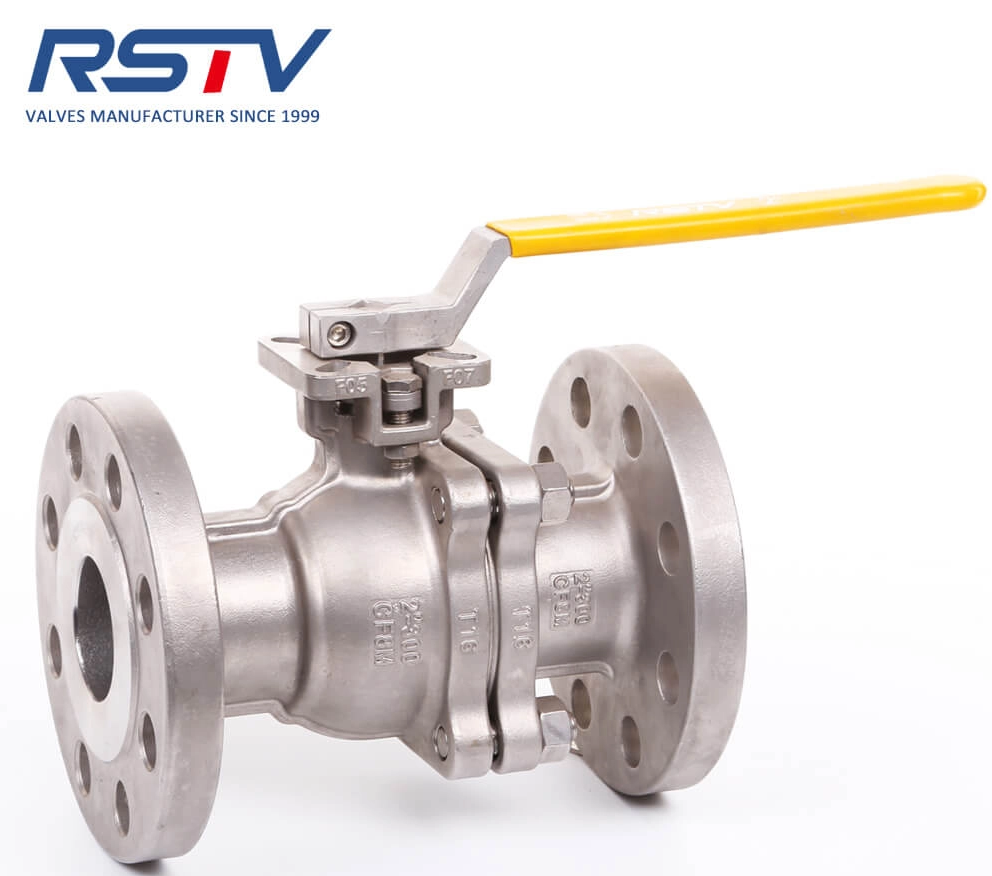
Quarter-turn valves offer rapid shutoff capabilities. A Flange End Ball Valve is highly effective in Class 150 and Class 300 applications. The floating ball design relies on line pressure to push the ball against the downstream seat to create a seal.
Evaluation criterion: For high classes (Class 600+), floating ball designs fail. The immense line pressure pushes the ball too hard against the seats, causing severe friction, seat deformation, and high torque. Buyers must transition to trunnion-mounted ball valves. A trunnion design anchors the ball at the top and bottom. This setup absorbs the line pressure and protects the soft seating materials.
Following a strict procurement framework prevents specification errors. Use these steps when sourcing your next batch of valves:
Determine maximum system temperature and maximum system pressure under worst-case scenarios.
Consult ASME B16.34 Material Groups to find the exact metal alloy that supports those parameters.
Identify the minimum necessary Pressure Class based on the applicable P-T chart.
Select your valve architecture (gate, globe, ball, check) based on your flow control needs.
Do not accept components on blind faith. Ensure the shortlisted manufacturer tests their valves to API 598 standards. Hydrostatic shell tests are typically conducted at 1.5x the 100°F pressure rating, not the nominal class number. For example, a Class 150 carbon steel valve rated for 285 PSI at 100°F will undergo a shell test near 425 PSI to verify structural soundness.
Procuring the right valve only solves half the problem. Poor installation practices ruin high-quality components.
Gasket Selection: The gasket material must also match the pressure class and the specific flange facing. A Class 150 Raised Face (RF) flange requires a different gasket style than a Class 900 Ring Type Joint (RTJ) flange.
Torque Specs: Higher pressure classes require significantly higher bolting torque to compress the gaskets properly. They also demand specialized stud materials. Standard bolts will stretch and fail. You must specify high-strength fasteners, such as ASTM A193 B7 studs, for elevated pressure classes.
Treat the valve pressure class as a starting parameter, not the final specification. A class designation only indicates dimensions and a baseline structural profile. Always demand the manufacturer’s P-T charts for the specific material grade being purchased. Relying on assumptions about pressure capacity leads to dangerous equipment failures.
Standardize your procurement language immediately. Update your purchase orders to explicitly include the Design Code, Pressure Class, Material Grade, and Max Operating Temp/Pressure. This eliminates vendor ambiguity and ensures you receive the exact hardware required to run your facility safely.
A: No. "Class 150" is a dimensional and structural designation. Depending on the material, it can handle up to 285 PSI at ambient temperatures, but its capacity drops as temperature increases.
A: No. The bolt circle diameters, number of bolts, and flange thicknesses differ. Adapters are required for safe integration.
A: They shouldn't, provided both strictly adhere to ASME B16.34 for the exact same material cast. If ratings differ, check if one vendor is using a different material grade or substituting a proprietary standard.
A: WOG (Water, Oil, Gas) is a non-shock ambient temperature rating, often used for threaded/smaller valves. ASME Pressure Class is a comprehensive structural standard that dictates flange dimensions and pressure capacities across varying temperatures.


