
Views: 0 Author: Site Editor Publish Time: 2026-08-07 Origin: Site


An industrial valve strainer acts as your primary defense line. You need it as a critical risk-mitigation component, not just an optional pipeline accessory. Downstream equipment failures often start invisibly. Stray debris, pipe scale, and particulate matter flow freely through unprotected lines. They quickly destroy expensive centrifugal pumps, compressors, and sensitive control valves.
Evaluating these protective devices requires precise engineering analysis. Relying on generic flow estimations leaves your infrastructure highly vulnerable to catastrophic downtime. You must calculate pressure drops accurately. You also need to understand specific mesh sizing requirements. We will explore how to align your mechanical choices with rigorous engineering standards like FCI and ASME. By the end, you will know exactly how to specify the right unit for your exact pipeline needs.
Primary Function: Mechanical interception of solid debris to protect high-value downstream assets for pipeline systems.
Selection Criteria: Proper sizing requires balancing maximum debris retention with acceptable pressure drop limits.
Type Matching: Selecting between a Y type strainer, basket, or T-type depends strictly on flow rate, installation orientation, and anticipated maintenance frequency.
Specification Variables: Material compatibility (e.g., cast steel vs. stainless) and end connections dictate long-term operational safety and compliance.
You must understand the distinct mechanical boundaries of these devices. A pipeline strainer captures large, visible particles. It protects mechanical integrity. It does not perform fine purification. A filter, conversely, removes microscopic contaminants to purify the media itself. People often confuse the two. This simple mistake leads to rapid system clogging. You use a strainer for coarse particulate removal. You use a filter for micron-level clarification.
You can easily quantify the return on investment here. Consider a high-performance turbine flow meter. It costs thousands of dollars to purchase and install. A rogue piece of weld slag can destroy its internal rotors instantly. Replacing a damaged centrifugal pump requires massive capital and halts production. A strainer costs a mere fraction of the equipment it protects. You gain massive returns by preventing catastrophic mechanical failures. The upfront cost is negligible compared to emergency replacement expenses.
These devices significantly impact your system fluid dynamics. Every inline component creates fluid resistance. Engineers call this inherent pressure drop (ΔP). Strainers inevitably reduce your overall flow velocity. You must account for this resistance during system design. Ignoring ΔP leads to starved pumps. Starved pumps lead to dangerous cavitation. We recommend analyzing the specific gravity of your fluid. You can then accurately predict how the internal screen will restrict forward momentum.
Treating a strainer like a micron-level filter.
Ignoring the fluid velocity changes after installation.
Failing to calculate the cost of potential pump damage.
Certain operational scenarios mandate mechanical filtration. You cannot skip this step safely. We categorize these strict requirements into four primary operational phases.
Pre-Commissioning & Startup: New pipelines hide dangerous hazards. Construction crews leave behind weld slag, joint compound, and stray metal shavings. You must capture this construction debris before initial system activation. Temporary startup screens prevent these rogue materials from destroying your pristine equipment.
Ahead of Sensitive Downstream Assets: You must place interception devices before vulnerable components. Control valves feature incredibly tight internal tolerances. Steam traps clog easily. Heat exchangers suffer from rapid scaling. Sensitive measurement instrumentation loses calibration when struck by particulates. Mandatory placement before these assets guarantees continuous operation.
High-Debris Media Applications: Continuous operation in harsh environments demands robust interception. Petrochemical refining involves unpredictable fluid consistencies. Raw water processing brings constant sand and sediment. Food-grade applications often process fibrous materials. You must assume media inconsistency as a baseline in these industries.
Regulatory & Engineering Compliance: Many scenarios involve strict industry standards. ASME B31.3 and API guidelines frequently require mechanical filtration. These rules focus on safety and environmental hazard mitigation. Non-compliance invites hefty fines and operational shutdowns. You must install the correct devices to satisfy regulatory inspectors.
You face severe risks if you ignore these placement rules. Stray debris acts like sandpaper inside your pipes. It erodes valve seats and destroys pump seals. Always evaluate your operational phase and your media type. This evaluation dictates your exact installation requirements.
You must match the structural architecture to your fluid conditions. Each design serves a distinct operational purpose. We will analyze the three dominant configurations used in modern piping systems.
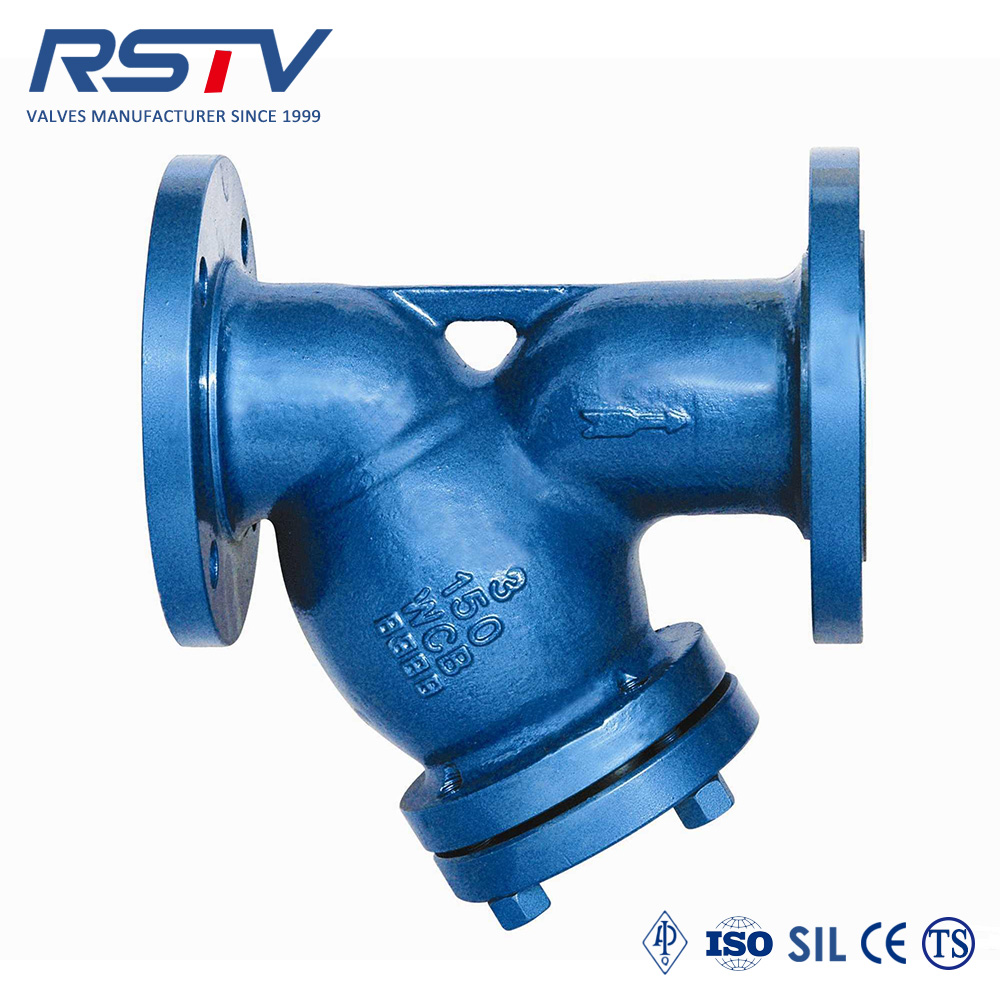
A Y type strainer offers immense versatility. It handles high-pressure systems effectively. It performs best in lines with low particulate concentrations. You can install it horizontally or vertically downward. This flexible installation makes it highly popular in tight piping galleries.
However, it carries distinct limitations. It has a limited dirt-holding capacity. The small collection pocket fills up quickly. It requires frequent blowdown cycles to remain clear. You should avoid this type if your fluid carries heavy debris loads.
Basket models dominate high-flow applications. They work best in horizontal lines facing significant debris loads. The upright basket design captures massive amounts of particulate matter. Duplex models take this further. They feature two parallel baskets. You can divert flow to clean one side without initiating a system shutdown.
These units also present challenges. They require a much larger physical footprint. You need ample floor space for installation. They also demand higher initial capital expenditure compared to Y-types.
Engineers specify T-type architectures for massive infrastructure. They excel in large nominal bore pipelines. They fit perfectly into tight space constraints requiring inline maintenance. The bathtub design allows technicians to lift the screen directly upward. You do not need to drain the entire line for basic servicing.
Architecture Type | Ideal Flow Conditions | Physical Footprint | Maintenance Frequency |
|---|---|---|---|
Y-Type | High pressure, low debris | Highly compact | Frequent (blowdown required) |
Simplex Basket | High flow, heavy debris | Large (requires overhead clearance) | Moderate (high holding capacity) |
Duplex Basket | Continuous heavy flow | Very large | Zero downtime during cleaning |
T-Type | Large bore pipelines | Compact inline | Moderate |
Specifying the wrong parameters guarantees operational failure. You must evaluate mesh sizing, housing materials, and connection types rigorously. We will break down each critical engineering variable.
You need a clear framework for selecting screen perforations. Mesh refers to the number of openings per linear inch. Micron measures the actual physical distance across a single opening. You must base this selection on the largest allowable particle for your downstream equipment. Check the manufacturer tolerances for your pumps and valves.
Avoid the dangerous trap of "over-straining." Many engineers specify screens that are far too fine. Fine screens capture microscopic debris unnecessarily. This accelerates system clogging. It spikes your pressure drop dangerously. Always match the mesh perfectly to the equipment requirement.
Your housing and screen materials dictate survival. Evaluate a cast steel strainer for severe applications. Cast steel handles high-temperature and high-pressure environments effortlessly. It resists thermal shock in steam systems. Conversely, you might specify ductile iron for standard commercial water lines. Highly corrosive media demands exotic alloys like Monel or Hastelloy. Never compromise on material chemical compatibility.
You must secure the unit to the pipeline safely. Your decision criteria here affects long-term maintenance.
Flanged: A flange strainer valve represents the industry standard for high-pressure lines. Flanges bolt together securely. They allow incredibly easy removal during major overhauls.
Threaded: You use threaded connections primarily for smaller lines. They suit low-pressure utility water or air systems.
Welded: Hazardous chemicals require welded joints. Welds guarantee zero-leak environments. They eliminate fugitive emissions entirely.
You cannot guess fluid resistance. Utilize Fluid Controls Institute (FCI) standards for accurate calculations. You must analyze the flow coefficient (Cv) data provided by the manufacturer. The Cv rating indicates how much water flows through the unit at a 1 PSI pressure drop. Plug your actual flow rate and fluid specific gravity into the Cv formula. This mathematical verification ensures the device will not starve downstream pumps.
A perfectly specified device fails if installed incorrectly. Field implementation carries unique physical risks. You must guide your piping designers and maintenance crews clearly.
Installing a Y-type device requires careful directional planning. You invite disaster if you install it with the blow-off pointing upward. Debris will simply fall back into the main flow stream. The collection pocket must face downward to trap particles using gravity.
Steam lines present a unique danger. Installing these units horizontally in steam systems creates a water hammer risk. Condensate pools inside the belly of the downward-facing pocket. High-velocity steam hits this water pool. It generates violent kinetic shockwaves. You must install them horizontally with the pocket facing sideways in steam applications.
Piping layouts often ignore human ergonomics. Designers must allow physical space for screen removal. Basket models require substantial overhead clearance for extraction. If technicians cannot physically remove the basket, they will skip maintenance. Design your galleries with access platforms and lifting hoists for large units.
Do not rely on guesswork for maintenance schedules. Implement differential pressure (DP) gauges across the installation. Install one gauge upstream and one downstream. Establish a maximum allowable ΔP threshold. This creates an empirical cleaning schedule. Technicians clean the screen only when the gauges dictate the necessity.
Commissioning requires special attention. Always use temporary fine-mesh startup screens initially. They capture the fine construction silt and weld dust. Run the system for several days. Once the lines flush clean, remove the temporary screens. Install the permanent coarser screens post-commissioning for normal daily operation.
You now possess the engineering framework to protect your fluid systems. The shortlisting logic follows a strict chronological path. First, verify your downstream asset tolerances. Second, calculate the acceptable pressure drop based on specific gravity and flow rate. Third, select the structural type matching your flow profile and space constraints. Finally, specify materials and connections suited to your thermal and chemical environment.
Prioritize verified engineering data over the lowest-bidder pricing. Request certified material test reports (MTRs) to guarantee metallurgical integrity. Demand exact flange specifications to ensure seamless installation. Evaluate published Cv values rigorously to protect your pumps. These actionable steps guarantee long-term pipeline integrity and operational safety.
Always match mesh size to equipment tolerances.
Calculate pressure drop using FCI standard formulas.
Install DP gauges for empirical maintenance tracking.
Use temporary screens during initial system startup.
Specify cast steel for high-pressure applications.
A: A strainer removes coarse, visible particulate matter to protect downstream mechanical equipment. It operates under higher pressure thresholds. A filter removes microscopic contaminants to purify the fluid media itself. Strainers catch large debris like scale; filters capture extremely fine impurities.
A: You calculate pressure drop using the manufacturer's flow coefficient (Cv) rating. The formula requires your actual fluid flow rate and the specific gravity of the media. Dividing the flow rate by the Cv value, then squaring the result and multiplying by specific gravity, yields the pressure drop.
A: Yes, you can install it vertically, but only in downward flow applications. The fluid must flow downward so gravity can push the debris into the screen pocket. Installing it in vertical upward flow allows debris to fall back into the pipeline.
A: You specify a flanged connection for high-pressure systems and larger pipe sizes (typically above 2 inches). Flanges meet strict industrial pressure ratings. They also provide superior maintenance accessibility, allowing technicians to unbolt and remove the unit easily without cutting pipes.


