
Views: 0 Author: Site Editor Publish Time: 2026-09-09 Origin: Site


Industrial fires pose severe, immediate risks to plant infrastructure and human life. When flames engulf a pipeline, containing highly flammable fluids or toxic gases becomes your absolute top priority. Unfortunately, procurement teams face a persistent and dangerous challenge in the current market. They must carefully distinguish between loose marketing claims like "fire safe designed" and rigorously verified compliance such as "fire tested and certified." Installing unverified units can lead to catastrophic media release, feeding the fire and multiplying the damage.
We wrote this article to give engineers and buyers a clear, standard-based framework. You will learn how to evaluate, shortlist, and correctly implement a true fire-safe ball valve for your facility. We break down the mechanical shifts, testing standards, and connection risks. By understanding these concepts, you can make informed, liability-reducing decisions to secure your most critical fluid handling systems.
Mechanical Shift: A true fire safe ball valve relies on a secondary metal-to-metal seal that engages only after the primary soft seat melts during extreme heat.
Proof of Compliance: "Fire safe designed" is an unverified claim; buyers must require certified documentation for API 607, API 6FA, or ISO 10497.
System Integrity: Valve connection types—such as a flange end ball valve versus a stainless steel wafer ball valve—drastically alter the thermal exposure and structural integrity of the pipeline in a fire scenario.
Post-Fire Reality: Fire safe valves are designed to fail safely, containing the media during the event. They are not designed to remain operational and must be replaced post-fire.
Understanding how a valve reacts to intense thermal stress is crucial for plant safety. Standard valves rely on soft materials to create bubble-tight seals. In a fire, these materials fail quickly. Engineers design fire-safe units to fundamentally shift their sealing mechanics mid-crisis.
Most process valves use Polytetrafluoroethylene (PTFE) or Reinforced PTFE (RTFE) for their primary seats. These materials provide excellent chemical resistance and low-friction operation under normal conditions. However, they possess a critical vulnerability to heat. When ambient temperatures exceed 400°F (204°C), PTFE begins to soften and deform. As the fire escalates, the soft seat completely melts or burns away. In a standard valve, this catastrophic failure immediately releases line media downstream, fueling the hazard.
A certified fire-safe design anticipates this exact soft-seat failure. Manufacturers machine a secondary metal lip directly into the valve body behind the primary soft seat. Once the PTFE melts away, the internal line pressure takes over. This pressure pushes the floating ball downstream. The ball forces itself against the machined metal lip. This action creates a secondary metal-to-metal seal. While this backup seal is not completely bubble-tight, it severely restricts internal leakage to strictly defined, acceptable limits.
Internal leakage is only one part of the equation. Preventing external fugitive emissions is equally vital. Standard valves use elastomeric O-rings or PTFE V-rings to seal the valve stem and body joints. During a fire, these elastomers vaporize. To counter this, fire-safe designs use high-density, high-temperature flexible graphite. Graphite maintains its physical volume and sealing properties well above 1000°F (537°C). It securely blocks gas or liquid from escaping into the atmosphere through the stem journal or body gaskets.
Fire-prone environments demand additional mechanical safeguards. Flowing media often generates static electricity inside the pipeline. If a spark discharges near flammable fluids, an explosion can occur. Fire-safe designs incorporate anti-static springs and metal balls. These components create a continuous grounding path from the ball to the stem, and out to the valve body. Additionally, engineers utilize internally inserted blowout-proof stems. An internal collar prevents pipeline pressure from shooting the stem out of the valve body if the packing gland fails during thermal distortion.
You cannot rely on visual inspections to determine fire safety. Valves must undergo brutal, real-world burn testing. Independent agencies subject these units to flames exceeding 1400°F (760°C) for 30 minutes. They subsequently quench the hot valves with cold water to simulate firefighter hoses. The resulting thermal shock tests the absolute limits of the body materials and secondary seals.
API 607 serves as the primary industry benchmark for process plants. This standard specifically evaluates soft-seated, quarter-turn valves. Technicians measure both internal through-leakage and external fugitive emissions during the 30-minute burn. They also measure leakage during the cool-down phase and after cycling the valve once. If a unit passes API 607, you can trust it to perform in demanding petrochemical scenarios.
Engineers often confuse API 6FA with API 607. API 6FA applies predominantly to valves built under API 6A and API 6D specifications. These are usually heavy trunnion-mounted units used in mainline pipelines and wellhead applications. The test parameters differ slightly, focusing heavily on the specific operational stresses of large-scale pipeline infrastructure.
For international procurement, buyers look to ISO 10497. The International Organization for Standardization harmonized this protocol heavily with the API standards. Testing under ISO 10497 essentially mirrors API 607 parameters. This harmonization simplifies global procurement, allowing European and Asian facilities to accept API-tested valves and vice-versa.
Selecting the right standard ensures compliance with local safety regulations and insurance requirements. Use the matrix below to align your procurement specifications.
Fire Testing Standards Comparison Matrix
Testing Standard | Primary Application | Valve Types Covered | Global Acceptance |
|---|---|---|---|
API 607 | Refineries, Chemical Plants, Process Lines | Soft-Seated, Quarter-Turn (Floating/Trunnion) | High (Americas, Global Petrochemical) |
API 6FA | Oil & Gas Pipelines, Wellheads | API 6A and API 6D Pipeline Valves | High (Midstream, Upstream Oil & Gas) |
ISO 10497 | Global Industrial Applications | Soft-Seated, Quarter-Turn | High (Europe, Asia, Harmonized regions) |
The type of connection you choose heavily influences pipeline survivability. The mechanical joint between the valve and the pipe reacts violently to thermal expansion. Selecting the wrong connection type can compromise an otherwise perfectly certified valve.
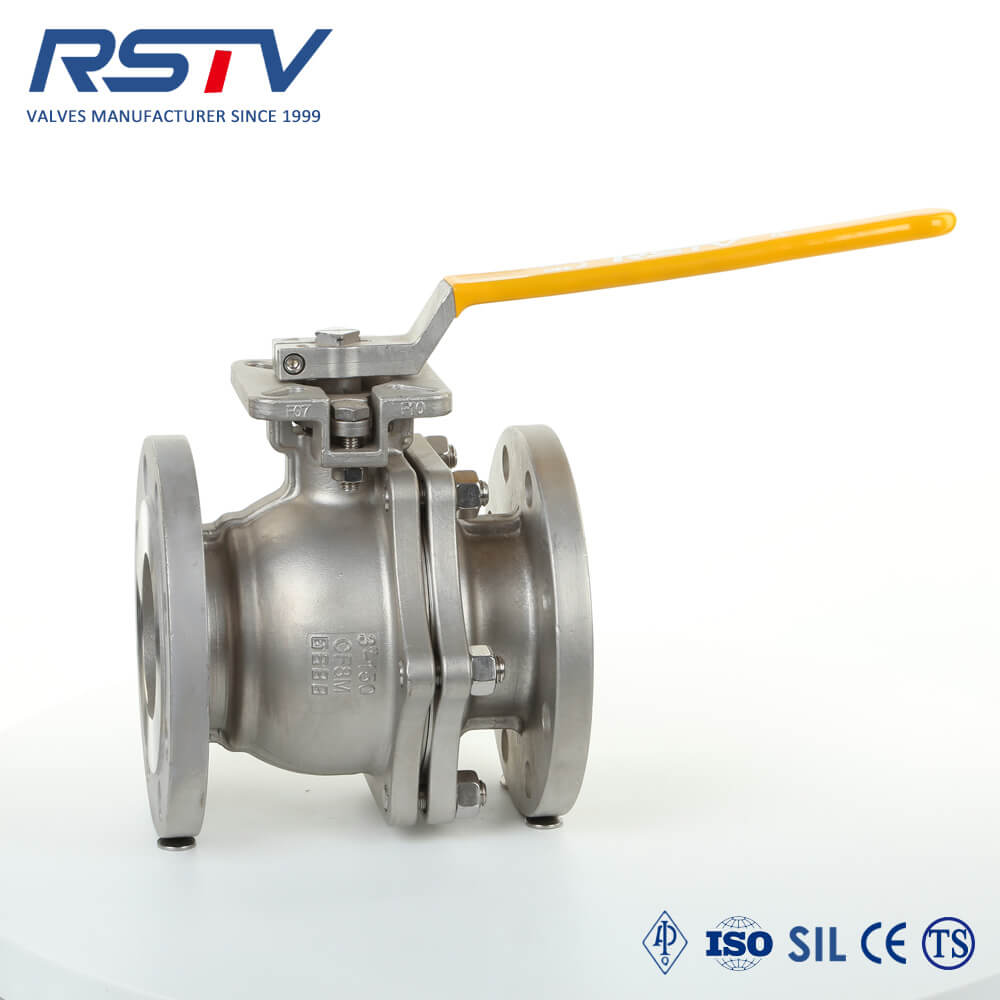
A flange end ball valve remains the absolute standard for high-pressure and petrochemical applications. Bolted flanges maintain rigid structural integrity. When exposed to extreme heat, heavy steel flanges contain thermal expansion much better than compact designs. The robust face-to-face dimensions provide significant thermal mass. This mass slows down heat transfer to the internal components. When installing these units, you must ensure maintenance teams use high-temperature rated flange gaskets (such as spiral wound graphite) and appropriately graded bolting (like ASTM A193 B7).
Operators frequently deploy a stainless steel threaded ball valve in smaller utility, water, or chemical dosing lines. They are cost-effective and easy to install. However, implementation requires careful consideration. Threaded joints face severe risks of thread galling and distortion under thermal stress. The pipe threads can warp, causing the joint itself to leak even if the valve internals remain secure. You must rigorously verify the thread sealant or PTFE tape used during installation. Standard pipe dopes will burn away instantly, so high-temperature thread locking compounds become a necessity in fire zones.
A stainless steel wafer ball valve offers a highly compact, space-saving design. You clamp these units directly between two pipeline flanges. While excellent for tight spaces, they present unique implementation hazards. The valve relies entirely on long, exposed flange bolts to hold it in place. During a fire, these exposed bolts heat up and expand rapidly. This rapid elongation risks a complete loss of clamping force. If the bolts stretch, the joint opens, and media escapes. Using wafer configurations in hazardous zones requires specialized high-tensile bolting and strict engineering evaluations.
Procuring reliable components requires strict adherence to documentation. You cannot afford to guess when plant safety is on the line. Use this checklist to weed out inadequate products during your bidding process.
Demand Certified Test Reports (MTRs): Never accept a manufacturer stating a product is "fire safe by design." This vague phrasing means they built it with graphite seals but never actually burned it. Require third-party witnessed test certificates (such as those signed by TUV, DNV, or Lloyd's Register). These certificates must explicitly map the exact valve size and pressure class to the standard.
Verify the Qualifying Range: Testing every single valve size is economically impossible. Standards allow manufacturers to test a base model to qualify a specific range of sizes and pressure classes. For example, burning a 2-inch Class 300 unit might qualify sizes from 2-inch to 4-inch, and pressure classes up to Class 600. Buyers must verify their requested valve falls strictly within the manufacturer's certified qualifying range.
Material Traceability: Heat tolerance starts with metallurgy. Ensure the stainless steel or carbon steel body materials match the required specifications for high-heat environments. Demand EN 10204 3.1 material certificates. You must actively avoid low-melting-point alloys (like brass or aluminum) in any critical pressure-containing components or handle mechanisms.
Check Body Bolting: Inspect the specification for the bolts holding the two-piece or three-piece body together. Standard commercial bolts will stretch and fail in a fire. Demand high-yield-strength fasteners designed for extreme thermal loads.
Buying a certified component only solves half the problem. How your teams install and maintain the unit dictates its actual performance during a crisis. Poor maintenance practices routinely destroy certified safety ratings.
Graphite packing possesses a much higher friction coefficient than standard PTFE or elastomeric O-rings. Because of this, fire-safe designs inherently require significantly higher operating torque. This mechanical reality impacts automation. If you automate a fire-safe unit, your actuator sizing must account for this increased friction. Engineers generally apply a 25% to 30% safety factor when sizing actuators for graphite-packed stems. Failing to oversize the actuator will result in operational failure, leaving the valve stuck during an emergency shutdown sequence.
Establish clear, uncompromising plant safety guidelines regarding post-fire actions. When a valve successfully survives a fire, it completes its lifecycle. The graphite seals are heavily compromised. The secondary metal seat is deformed. The structural temper of the body bolts is ruined. You can never reuse it. The unit must be mechanically isolated, carefully removed from the pipeline, and immediately replaced.
Your maintenance teams pose one of the biggest risks to fire safety integrity. During routine plant turnarounds, technicians frequently rebuild valves using standard replacement kits. They might unknowingly replace the factory-installed graphite packing with standard PTFE V-rings because PTFE is cheaper and creates less handle friction. This simple, well-intentioned swap instantly voids the fire safe rating. You must institute strict inventory controls to separate standard repair kits from high-temperature repair kits.
Specifying a reliable component for volatile environments is an absolute exercise in risk mitigation and liability control. You cannot rely on assumptions or marketing jargon when designing pipelines that handle flammable media. A verified design acts as your last line of defense, utilizing secondary metal seals and graphite packing to lock down the pipeline during an inferno.
We advise procurement and engineering teams to align their specifications strictly with API or ISO standards. You must demand verifiable, third-party witnessed documentation before issuing any purchase orders. Evaluate your connection types carefully, recognizing that threaded and wafer designs introduce unique vulnerabilities compared to flanged alternatives.
Your clear next step is to audit your current piping specifications. Ensure your inventory controls prevent maintenance teams from installing standard elastomers into certified bodies. By locking down your procurement and maintenance protocols, you secure your infrastructure and protect your personnel against catastrophic failures.
A: "Designed" means the manufacturer built it with secondary metal seats and graphite seals, but it hasn't been empirically tested. "Approved" or "Certified" means the specific valve design has passed a rigorous, third-party witnessed burn test (e.g., API 607) to prove those mechanical features actually work during a fire.
A: No. The valve functioned exactly as designed by sacrificing its internal soft parts to prevent a leak. Because extreme heat alters the metal's temper and compromises the graphite seals, its structural integrity is permanently destroyed post-fire. You must replace it.
A: No. While the stainless steel body easily withstands extreme heat, standard internal components like PTFE seats and elastomeric O-rings will melt quickly. Without a dedicated secondary metal-to-metal sealing mechanism and graphite packing, a standard stainless valve will suffer catastrophic leaks in a fire.
A: Fire-safe designs rely on high-density flexible graphite for stem packing and body seals instead of smooth PTFE. Graphite creates significantly more mechanical friction against the moving stem. This increased friction necessitates a higher turning force and requires larger, more powerful pneumatic or electric actuators.


