
Views: 0 Author: Site Editor Publish Time: 2026-06-13 Origin: Site


Valve failure in oil and gas pipelines guarantees catastrophic downtime. It can cause severe environmental hazards. It frequently leads to critical safety breaches. Pipeline operators face a complex engineering challenge every day. They must balance strict API compliance against extreme pressure tolerance. They also need to manage tight procurement budgets for large-diameter pipelines. You cannot afford to cut corners on isolation equipment. Multiple materials exist for pipeline components. However, the cast steel gate valve remains the undisputed industry standard. Specifically, API 600 compliant models dominate the market. They deliver reliable on-off flow control. They also ensure long-term capital efficiency in midstream and downstream applications. We will explore why these components outperform alternatives. You will learn how to specify the right materials. We will also cover essential compliance standards for safe hydrocarbon transport.
Optimal Cost-to-Strength Ratio: Cast steel provides the necessary tensile strength for high-pressure oil and gas applications without the prohibitive costs and size limitations of forged steel.
API 600 Compliance is Non-Negotiable: Heavy-wall construction and rigorous testing standards ensure operational safety in severe service environments.
Unrestricted Flow: Full-bore designs minimize pressure drop and allow for seamless pipeline pigging operations.
Material Versatility: WCB gate valve bodies paired with appropriate trim materials can handle everything from crude oil to sour gas.
Pipeline isolation requires absolute precision. You must achieve zero-leakage shutoff during maintenance routines. Emergency scenarios demand immediate and complete isolation. A minor leak across the sealing surface creates massive downstream hazards. Workers rely on complete fluid isolation to perform repairs safely. If the seal degrades, volatile hydrocarbons will seep into isolated zones. This compromises human safety and triggers severe regulatory fines. You need equipment designed specifically for impenetrable barriers.
We must strictly enforce the on-off mandate. An oil gas gate valve serves one primary purpose. It either stops the flow completely or allows it to pass freely. You must never use it for throttling or regulating flow volume. Partially open wedges create high-velocity fluid paths. The fluid often contains sand, debris, or abrasive particulates. This high-speed abrasive flow rapidly erodes the seating surfaces. Seat erosion destroys the seal integrity. A damaged seal will fail to isolate the pipeline during critical emergencies. Decades of reliable use depend on keeping the wedge either fully raised or tightly seated.
Capital expenditure always competes against risk mitigation. Upfront material savings look highly attractive on procurement spreadsheets. Some buyers consider using substandard alloys to lower initial costs. This approach creates an enormous financial trap. Cheap materials fail prematurely under aggressive pipeline conditions. They require frequent interventions. Maintenance crews must constantly repair or replace failing components. These recurring maintenance costs quickly dwarf the initial savings. You also face expensive production shutdowns during unplanned repairs. Selecting robust materials upfront exponentially decreases long-term replacement expenses. It acts as an insurance policy against catastrophic operational failures.
Pipeline networks span hundreds of miles across extreme environments. They endure immense mechanical stress every hour. The internal fluid exerts massive outward pressure on the pipe walls. The surrounding environment causes constant thermal expansion and contraction. Metals expand during hot desert days. They shrink during freezing nights. This thermal cycling puts enormous axial loads on the flange connections.
Cast steel effectively absorbs these violent forces. The material possesses high tensile strength. It yields slightly under pressure without fracturing. This flexibility allows it to withstand extreme mechanical stress. It excels at maintaining structural integrity under continuous fluid impact. Brittle materials would crack under these fluctuating loads. Cast steel absorbs the energy and retains its shape. This ensures the pressure boundary remains entirely intact throughout its service life.
Efficiency drives profitability in fluid transportation. Every obstruction in the pipe requires more energy to push the fluid forward. The straight-through, full-bore design eliminates these obstructions. When fully open, the wedge retracts entirely into the bonnet. The internal diameter matches the connecting pipe exactly.
This design creates virtually zero pressure drop across the connection. Minimal pressure drop directly translates to reduced pumping energy costs. Pumps do not have to work harder to overcome artificial restrictions. Furthermore, this full-bore geometry enables routine pipeline pigging. Operators send cleaning and inspection tools down the pipe. These "pigs" require a smooth, unrestricted path. A full-bore design allows the pig to pass through seamlessly. It prevents the tool from getting stuck and blocking the line.
Main transmission lines require massive diameters to transport profitable volumes. You frequently encounter pipe sizes ranging from 24 inches up to 60 inches. Manufacturing equipment for these large-bore applications presents a unique challenge. You must create enormous, solid metal bodies.
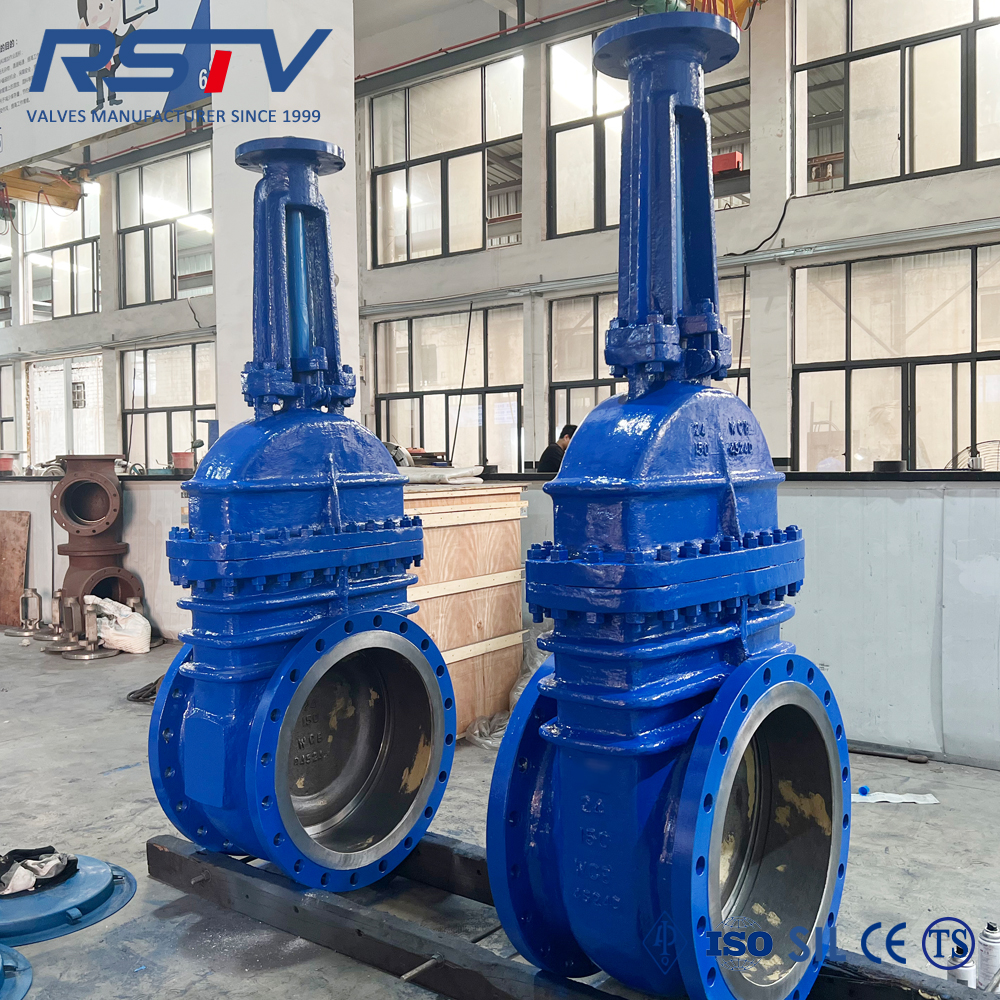
Casting handles this manufacturing reality perfectly. Foundries pour molten steel into massive sand molds. This process scales beautifully for huge dimensions. In contrast, forging a 36-inch body is economically unfeasible. The forging presses required for that size are incredibly rare and expensive. Therefore, we rely almost exclusively on a cast steel valve for bulk pipeline infrastructure. It provides the necessary strength at a massive scale. It keeps large infrastructure projects within rational budget constraints.
Procurement teams sometimes misinterpret material specifications. They see cheap cast iron options and wonder if they apply to oil lines. You must treat cast iron as strictly relegated to low-pressure water systems. It possesses a high carbon content in the form of graphite flakes. These flakes make the metal extremely brittle. It cannot handle mechanical shocks or sudden pressure spikes.
Hydrocarbons present a volatile, high-pressure environment. A sudden pressure surge will shatter a cast iron body. This causes a catastrophic, explosive release of flammable fluid. You must establish a rigid safety baseline. Never use cast iron for primary hydrocarbon containment. It lacks the ductility required to stretch and absorb pipeline stress. Always default to steel for volatile media.
Engineers often debate the merits of casting versus forging. Both processes utilize steel, but they arrange the internal grain structure differently. We must analyze this engineering compromise carefully to make smart procurement decisions.
Forged steel features a highly uniform, compressed grain structure. The forging process beats out microscopic voids. This makes it incredibly strong and nearly impervious to high pressure. However, it faces severe size and cost limitations. You typically only see forged bodies in sizes under 2 inches. They serve best in extreme high-temperature instrumentation lines or supercritical steam applications.
Cast steel represents the pragmatic choice for main pipelines. Specifically, we frequently deploy the WCB gate valve. It delivers over 90% of the performance of forged steel. More importantly, it achieves this at a scalable size and a rational price point. You gain excellent tensile strength without bankrupting the project budget.
Material Comparison Chart: Engineering and Application Profiles | |||
Feature | Cast Steel (WCB) | Forged Steel (A105) | Cast Iron (A126) |
|---|---|---|---|
Manufacturing Process | Molten pour into sand molds | High-pressure mechanical hammering | Molten pour into sand molds |
Grain Structure | Isotropic (uniform in all directions) | Directional (highly compressed) | Brittle (graphite flakes interrupt matrix) |
Size Scalability | Excellent (Up to 60+ inches) | Poor (Typically ≤ 2 inches) | Good (Up to large sizes) |
Ideal Application | Main oil/gas pipelines, bulk transport | High-pressure steam, instrumentation | Low-pressure municipal water, HVAC |
Cost Factor | Moderate / Highly scalable | Very High per inch | Very Low |
The petroleum and natural gas industries do not guess at safety standards. They rely on authoritative baselines to ensure global consistency. An API 600 gate valve serves as the default specification for these demanding sectors. The American Petroleum Institute developed this standard specifically for heavy-duty refinery and pipeline service. It eliminates ambiguity from the manufacturing process. When you specify API 600, you guarantee a specific level of ruggedness.
Wall thickness separates heavy-duty pipeline equipment from standard industrial gear. API 600 mandates exceptionally thick wall dimensions. It requires much thicker walls than standard industrial specifications like API 603 or ASME B16.34. This extra metal serves a vital engineering purpose.
It provides a crucial corrosion allowance. Aggressive media, such as raw crude or sour gas, slowly eat away at metal surfaces. The thick wall acts as a sacrificial layer. The internal fluid can corrode the inner boundary for decades without compromising the structural pressure rating. Thinner walls would breach and leak under the same corrosive attack. The heavy-wall mandate guarantees longevity in severe service environments.
Internal geometry directly affects operational reliability. You must pay close attention to the wedge and stem configurations. API 600 requires specific design characteristics to handle thermal and mechanical stress.
Flexible Wedge Designs: Solid wedges often get stuck. If you close a solid wedge while hot, the surrounding metal shrinks as it cools. This thermal contraction locks the wedge tightly in place. Flexible wedges feature a hollowed-out center. This allows the two sealing faces to flex independently. They adapt to the thermal expansion and contraction of the body. This prevents the wedge from binding or jamming.
Blowout-Proof Stems: The stem connects the external handwheel to the internal wedge. High internal pipeline pressure constantly pushes outward against the stem. A blowout-proof design incorporates an integral collar at the base of the stem. This collar rests securely under the bonnet seal. Even if the packing gland fails completely, the internal pressure pushes the collar up against the bonnet. This prevents the stem from launching out of the body like a projectile. It guarantees operator safety during extreme pressure spikes.
The external body material dictates the baseline pressure and temperature rating. However, you must specify the correct grade for your exact climate. A standard WCB body works perfectly for most ambient environments. It handles normal crude oil and natural gas flawlessly. However, if your pipeline runs through arctic environments, WCB becomes brittle. You must specify LCC (Low-Temperature Carbon Steel) for freezing climates. LCC retains its ductility well below freezing.
You must also carefully specify the internal trim components. The trim includes the stem, seat rings, and wedge seating surfaces. These parts endure the most friction and fluid velocity. You use specific API trim numbers to match the internal media. For example, Trim 8 utilizes a 13% Chromium alloy. It offers excellent general wear resistance. If your pipeline transports sour gas, standard trims will fail rapidly. Sour gas contains high levels of hydrogen sulfide. This causes catastrophic sulfide stress cracking. You must specify NACE MR0175 compliant trims. These materials feature controlled hardness levels to resist hydrogen embrittlement.
Common API Trim Specifications and Applications | |||
Trim Number | Stem Material | Seating Surface Material | Typical Pipeline Application |
|---|---|---|---|
Trim 1 | 13% Cr (F6a) | 13% Cr (F6a) | Mildly corrosive media, low-pressure oil. |
Trim 5 | 13% Cr (F6a) | Stellite 6 (Hardfaced) | High-temperature fluids, abrasive particulates. |
Trim 8 | 13% Cr (F6a) | 13% Cr / Stellite 6 | General oil and gas, excellent baseline durability. |
Trim 12 | 316 Stainless | 316 SS / Stellite 6 | Corrosive environments, sour gas (NACE compliant). |
You must adopt an evidence-oriented approach to procurement. Do not trust marketing brochures alone. Demand rigorous documentation from your certified manufacturers. Flaws in casting are invisible to the naked eye. You need scientific proof of structural integrity.
API 598 Pressure Testing: Demand certified test reports. The vendor must pressurize the assembled unit beyond its rated capacity. They must prove zero leakage past the seats and no seepage through the body shell.
Positive Material Identification (PMI): Require PMI reports for the alloy composition. This handheld spectrographic test confirms the exact chemical makeup of the steel. It prevents vendors from slipping cheaper, incorrect alloys into your shipment.
Radiographic Testing (RT): Castings can develop internal voids or gas pockets as the molten metal cools. These hidden defects create weak points. Demand full RT on critical casting areas. X-rays reveal any internal porosity, ensuring the pressure boundary is solid.
You must evaluate how field crews will operate and maintain the equipment over decades. Manual handwheels work fine for small diameters. However, large transmission lines require significant torque to overcome internal pressure. You should evaluate actuation readiness before submitting requests for quotes.
Determine if you need gear-operated solutions or fully motorized actuators. Motor-operated units allow remote control from a central facility. This proves essential for emergency shutdown systems. Furthermore, assess the ease of inline maintenance. The stem packing will eventually wear out from repeated cycling. You need designs that allow technicians to repack the stem seals while the line remains pressurized. Look for features like a back-seat configuration. This isolates the stuffing box from line pressure. It allows safe, emissions-compliant repacking without halting production.
Specifying pipeline isolation equipment requires strict discipline. It is fundamentally an exercise in operational risk management. You must balance unyielding structural integrity with scalable project costs. Relying on API 600 standards ensures you meet these demanding requirements safely.
Keep these concise takeaways in mind:
Heavy-wall cast steel provides the ultimate cost-to-strength ratio for large pipelines.
Full-bore designs save energy and enable essential pigging operations.
Proper trim selection prevents catastrophic failures in sour gas environments.
Rigorous vendor testing proves the absence of hidden casting defects.
Take action before submitting your next RFQ. Audit your specific pipeline media. Determine if you handle sweet crude or corrosive sour gas. Document your maximum operating pressures and extreme ambient temperatures. Use these exact parameters to specify the proper steel grade and trim number. This preparation guarantees you procure equipment built to last.
A: The difference lies primarily in carbon content and tensile strength. WCB (Weldable Cast B-grade) is the standard carbon steel alloy used for moderate temperatures. WCC (Weldable Cast C-grade) contains slightly more carbon and manganese. This gives WCC a higher tensile strength and a slightly higher pressure-temperature rating. Engineers choose WCC when pressure requirements slightly exceed standard WCB limits.
A: No. You must never use them for throttling. They are designed exclusively for fully open or fully closed operations. If you leave the wedge partially open, the high-velocity fluid will relentlessly strike the seating surfaces. This causes severe vibration, rapid seat erosion, and permanent damage to the seal integrity.
A: API 600 mandates a significantly thicker wall dimension than ASME B16.34. This heavy-wall requirement provides a built-in corrosion allowance. In aggressive oil and gas environments, the media slowly degrades the internal metal. The thicker API 600 wall ensures the pressure boundary remains safe and intact over decades of corrosive exposure.
A: You can expect a lifespan of 20 to 30 years under normal crude oil conditions. However, this range depends heavily on proper specification and care. Using the correct internal trim, performing routine stem lubrication, and replacing packing seals promptly will maximize its operational life. Harsh environments like sour gas may reduce this timeline if you fail to specify NACE-compliant materials.


