
Views: 0 Author: Site Editor Publish Time: 2026-06-16 Origin: Site


Procuring the right fluid control components requires a delicate balance. Engineers constantly face a difficult dilemma during the specification process. Specifying the wrong materials inevitably leads to significant operational problems. You might experience premature failure from severe internal corrosion or rapid erosion. Alternatively, you could suffer unnecessary budget bloat by over-engineering simple utility lines. We must evaluate every component carefully to ensure system reliability. This guide provides a clear, practical evaluation framework for your next project. We will compare standard carbon steel, typically grades WCB or WCC, against popular stainless steel alloys like CF8M and 316. You will learn how medium compatibility and operating environments dictate material selection. We explore specific design parameters, mechanical properties, and strict compliance mandates. This comprehensive approach ensures you specify the exact right valve for your specific industrial application.
Carbon Steel is the industry standard for high-pressure, non-corrosive environments (like standard HVAC or high-temp steam) where tensile strength and cost-efficiency are prioritized.
A stainless steel check valve is mandatory for aggressive media, cryogenic applications, and environments requiring strict hygiene or chloride resistance.
Valve design (e.g., opting for a wafer check valve over a swing check valve) can significantly alter the material volume required, bridging the price gap between carbon and stainless steel.
Carbon steel serves as the foundational material in countless industrial fluid systems. Engineers specify ASTM A216 WCB or WCC grades because they offer exceptionally high mechanical strength. These alloys perform brilliantly in high-temperature applications. You can safely operate standard carbon steel components in environments reaching up to 800°F (426°C). The material retains its structural integrity and pressure-containing capabilities under intense thermal stress.
However, we must acknowledge a critical vulnerability. Carbon steel remains highly susceptible to oxidation and direct chemical attack. The material lacks inherent protective properties against corrosive media. If you expose bare carbon steel to moisture, acids, or saline solutions, rapid degradation occurs. Facilities often apply specialized protective linings, like epoxy or PTFE, to mitigate this risk. Yet, these coatings add complexity and introduce potential failure points if the lining gets scratched or compromised during operation.
Stainless steel fundamentally changes the corrosion resistance equation. Grades like ASTM A351 CF8 (equivalent to 304) and CF8M (equivalent to 316) dominate the premium valve market. Their secret lies in their specific chemical composition. Chromium makes up roughly 18% of the alloy. It reacts with oxygen to form a microscopic, self-repairing passive oxide layer on the metal surface. This invisible shield prevents further oxidation. CF8M adds 2% to 3% Molybdenum into the mix. This addition dramatically improves resistance to pitting and crevice corrosion.
Despite these impressive properties, an SS check valve is not universally immune to all forms of chemical attack. We must maintain technical credibility by acknowledging specific vulnerabilities. For instance, standard 316 stainless steel suffers from stress corrosion cracking when exposed to concentrated chlorides at elevated temperatures. You must evaluate the exact chemical makeup of your process fluid before assuming stainless steel will permanently solve your corrosion problems.
Mapping your media types to specific material limits represents the most critical step in valve selection. Fluid composition dictates your entire procurement strategy. Benign fluids, such as treated boiler feedwater or dry natural gas, flow seamlessly through carbon steel. Conversely, aggressive media demand superior metallurgical defenses. Sour gas contains deadly hydrogen sulfide. Acidic fluids actively dissolve base metals. Saline water aggressively attacks microscopic surface imperfections.
You must establish clear boundaries for material selection. A dedicated corrosion resistant check valve becomes mandatory when handling these aggressive fluids. Alloys like 316L (low carbon) prevent carbide precipitation during welding. Duplex stainless steels offer incredible resistance to chloride-induced stress corrosion cracking. You only specify standard carbon steel when the medium guarantees zero corrosive activity throughout the planned operational lifespan.
Temperature extremes severely impact molecular structures. We evaluate performance across both ends of the thermal spectrum. Cryogenic applications punish base metals heavily. Liquid nitrogen or liquefied natural gas (LNG) systems operate at unbelievably low temperatures. In these cryogenic states, stainless steel brilliantly retains its inherent ductility. It absorbs impacts and shifts without shattering. Carbon steel, unfortunately, undergoes a ductile-to-brittle transition. It becomes highly brittle and can catastrophically shatter under sudden pressure spikes in sub-zero environments.
At the opposite extreme, we analyze high-temperature creep resistance. Creep describes the slow, permanent deformation of solid materials under continuous mechanical stress. Both materials handle elevated heat well, but carbon steel often provides superior dimensional stability in standard high-temp steam utility lines. Stainless steel exhibits higher thermal expansion rates. You must account for this expansion during the initial piping design phase to prevent binding inside the valve body.
Mechanical integrity ensures safe operations under extreme conditions. American Society of Mechanical Engineers (ASME) B16.34 class ratings govern these specifications. You will routinely encounter ratings ranging from Class 150 up to Class 2500. Both alloys can achieve these extreme pressure ratings.
However, wall thickness requirements differ slightly between the two alloys. Carbon steel generally offers slightly higher yield strength at room temperature compared to standard austenitic stainless steels. To meet the exact same ASME pressure class, a stainless steel body might require slightly thicker walls. We summarize these comparative baseline limits in the table below.
Performance Metric | Carbon Steel (WCB/WCC) | Stainless Steel (CF8M/316) |
|---|---|---|
Corrosion Resistance | Poor (Requires coating) | Excellent (Passive oxide layer) |
Max Temperature Limit | ~800°F (426°C) | ~1000°F (537°C) to 1500°F depending on grade |
Cryogenic Ductility | Poor (Becomes highly brittle) | Exceptional (Retains toughness) |
Tensile Strength | Very High | High |
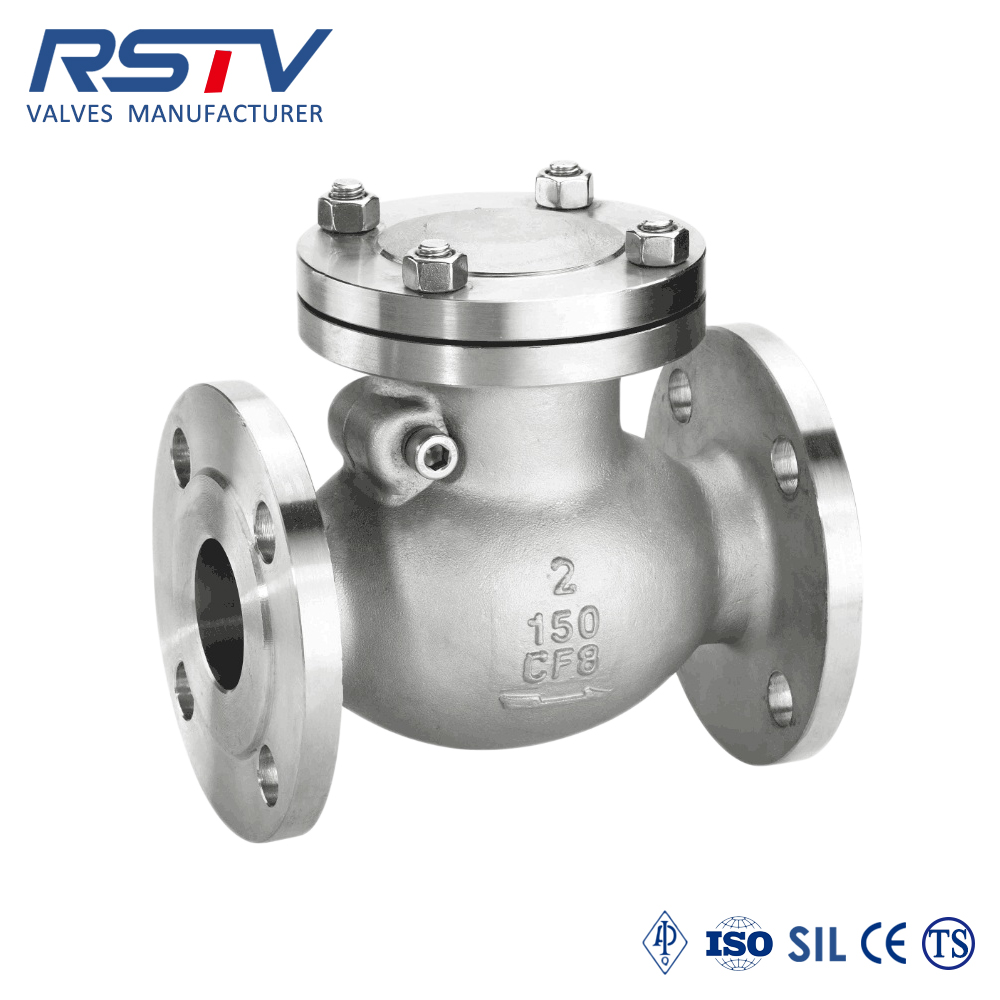
Material volume heavily dictates component pricing. Traditional designs feature bulky, heavy cast bodies. A standard swing check valve requires a massive amount of metal to house the internal disc and hinge assembly. This larger body mass makes upgrading entirely from carbon to stainless steel highly capital-intensive. You pay for every ounce of premium alloy.
Because full stainless bodies cost significantly more, engineers frequently employ hybrid strategies. They specify carbon steel bodies but require internal stainless steel trim components. Hinge-pin wear poses a massive threat to valve longevity. The internal disc constantly swings open and slams shut, creating severe friction. By specifying API Trim 8 or Trim 12, you ensure the seating surfaces and hinge pins utilize high-grade stainless steel. This prevents internal galling and extends the mechanical lifespan without buying a completely solid stainless body.
Modern design innovations offer clever workarounds for expensive material limits. You can completely change the volumetric equation by rethinking the physical shape. A compact wafer check valve utilizes a flangeless, ultra-slim design. It slips perfectly between two existing pipe flanges. This design radically reduces the total material weight required for manufacturing.
Implementation insight: We strongly suggest wafer designs as a highly effective workaround for budget-restricted projects. Because the wafer body uses a fraction of the metal compared to a bulky swing design, a full stainless steel wafer valve often costs less than a carbon steel swing valve of the exact same nominal pipe size. You gain the superior chemical resistance of CF8M without destroying your procurement budget.
Valve Design Style | Relative Material Volume | Alloy Upgrade Feasibility |
|---|---|---|
Standard Swing Style | 100% (Baseline Heavy Cast) | Low (High raw material costs) |
Dual Plate Wafer Style | ~30% to 40% | High (Minimal material premium) |
Single Disc Wafer Style | ~25% to 35% | Very High (Most budget-friendly) |
Every major industrial sector enforces strict material guidelines. You cannot select alloys based purely on preference. Regulatory frameworks and industry standards legally bind your specification choices. We must examine how specific sectors mandate particular metallurgical solutions.
Oil & Gas and Petrochemical: This sector presents some of the harshest environments on earth. Facilities routinely process sour service fluids containing hydrogen sulfide. NACE MR0175 / ISO 15156 compliance stands as an absolute legal requirement here. It dictates exact hardness levels and material treatments to prevent sulfide stress cracking. Engineers frequently specify carbon steel bodies with rigorous stainless steel trim for standard pipelines. However, full stainless bodies become necessary for highly refined downstream chemical processes.
Water Treatment and Desalination: Brackish water destroys weak metals. Desalination plants battle constant chloride exposure. Standard 304 stainless steel fails quickly here. We evaluate chloride-induced stress corrosion cracking risks very seriously. Facilities heavily rely on advanced 316L, Duplex, or Super Duplex stainless steels to survive the harsh saline conditions.
Food, Beverage, and Pharmaceutical: Hygiene overrides all other concerns in these spaces. FDA regulations and 3-A sanitary standards dictate component design. These stringent rules disqualify carbon steel entirely. Carbon steel rusts, pits, and harbors dangerous bacterial growth. You must exclusively use highly polished stainless steel to guarantee consumer safety and product purity.
HVAC and General Utility: Carbon steel remains the undisputed champion for building utilities. Chilled water loops, boiler feedwater lines, and standard non-potable utility systems feature benign chemistry. The robust strength and wide availability of carbon steel make it the undefeated baseline for these mundane yet critical applications.
Selecting the right alloy represents only the first hurdle. Improper installation ruins perfectly good components. Stainless steel carries a specific installation risk called thread galling. When two stainless steel threads rub together under high pressure, the friction destroys the passive oxide layer. The metals physically cold-weld together. Once galled, you cannot unscrew the components without cutting the pipe. You must enforce the use of specific anti-seize compounds during installation to prevent this frustrating phenomenon.
Carbon steel carries its own unique maintenance risks. Facilities often install epoxy-lined carbon steel valves in mildly corrosive environments. This works well until the coating degrades. A tiny scratch in the epoxy exposes the raw steel beneath. Because the exposed area is extremely small compared to the surrounding pipe, localized galvanic corrosion attacks the scratch aggressively. The metal pits rapidly, causing a pinhole leak straight through the thick steel wall long before the rest of the body degrades.
Theoretical availability means nothing if the factory cannot deliver the parts. We must acknowledge hard market availability realities. Standard grades like ASTM A216 WCB and ASTM A351 CF8M dominate global supply chains. Manufacturers heavily stock these castings. You can typically source them with very short lead times.
However, specialized requests drastically alter your project schedule. If you specify custom carbon steel bodies paired with exotic trims, lead times multiply. Higher-grade alloys, like 317L or specific Duplex variants, face extended manufacturing queues. Foundries only pour these specialized melts occasionally. You must factor these supply chain constraints into your project timeline well before construction begins.
Material selection ultimately relies on a straightforward decision tree. If your system handles aggressive media, operates in extreme sub-zero cold, or requires strict hygienic purity, you must specify stainless steel. The chemical resistance and cryogenic toughness are non-negotiable. Conversely, if your medium remains benign, runs at high pressure, and upfront budget constraints drive the project, specify carbon steel equipped with the appropriate stainless internal trim. This delivers maximum mechanical strength without wasting resources.
Your next step requires immediate action. Do not guess your system parameters. You must actively audit your system's specific ASME pressure and temperature class requirements. Analyze the precise chemical composition of your media, including trace elements like chlorides. Finally, evaluate your physical space constraints to determine if a slim wafer design might optimize your budget. Gather this concrete data before submitting your official requests for quotation to valve manufacturers.
A: No. Hybrid trims offer excellent mechanical longevity by preventing seating surface wear and hinge-pin galling. However, they cannot protect the outer shell. If the fluid itself is corrosive, it will rapidly attack and eat through the carbon steel valve body, leading to a catastrophic blowout regardless of the internal stainless trim.
A: Yes. While the body resists corrosion brilliantly, the internal mechanical components still endure severe physical stress. Seating surfaces inevitably wear down over thousands of cycles. Spring-loaded mechanisms suffer from metal fatigue. You must perform regular inspections and replace internal seals to ensure tight shutoff capabilities.
A: You should request and review the Material Test Reports (MTRs) provided by the manufacturer. These documents trace the exact chemical heat of the metal. Additionally, legitimate components feature standard cast markings directly on the valve body indicating the ASTM grade, such as "CF8M" or "WCB", along with size and pressure ratings.
A: Cast iron works for very basic, low-pressure water systems. However, it is highly brittle compared to carbon steel. It cannot withstand water hammer, physical impacts, or thermal shock. Carbon steel provides vastly superior durability, ductility, and safety margins, making it the better choice for demanding industrial utility lines.


