
Views: 0 Author: Site Editor Publish Time: 2026-06-15 Origin: Site


Industrial fluid control presents a high-stakes reality for plant operators everywhere. Valve failure in critical process sectors triggers severe consequences, ranging from sudden unplanned downtime to dangerous safety hazards and strict compliance violations. You simply cannot afford weak links within your pipeline network. Selecting the absolute best component prevents catastrophic leaks and costly maintenance delays.
This is exactly why a flange end ball valve remains the default standard for highly demanding applications. It consistently provides zero-leakage isolation, handles extreme high-pressure surges gracefully, and allows for frequent inline maintenance without line destruction. A robust flanged connection guarantees enduring mechanical integrity.
This guide bypasses basic definitions to deliver advanced, actionable insights. We will focus strictly on application-specific selection criteria, non-negotiable compliance standards, and proven risk mitigation strategies. Procurement managers and engineering teams will learn how to specify these vital components precisely for heavy industrial demands.
Flanged connections dramatically reduce Mean Time To Repair (MTTR) compared to welded alternatives, specifically in environments demanding rigorous maintenance schedules.
Petrochemical applications require strict adherence to API standards (e.g., API 607 for fire safety, API 641 for fugitive emissions) and specialized seat materials.
Water treatment facilities prioritize automated flow control, chemical resistance, and specific port sizes to handle everything from corrosive dosing to high-volume sludge.
Proper evaluation requires balancing upfront actuator compatibility and material costs against long-term lifecycle reliability.
Heavy industries face a constant engineering dilemma. Plant managers must routinely choose between absolute joint integrity and future maintenance accessibility. Welded valves provide a permanent, leak-proof seal. However, they demand intense labor during scheduled repairs. You cannot simply unbolt a welded valve. Technicians must physically cut the pipe, clear residual volatile fluids, and perform hazardous hot work. This drastically extends planned facility outages and inflates labor budgets.
The flanged connection resolves this operational bottleneck completely. It delivers a highly secure, high-pressure seal suitable for the most aggressive media. More importantly, technicians can drop a flanged ball valve straight out of the line using standard hand tools. You do not need specialized cutting equipment. You also avoid acquiring strict hot work permits. This functional advantage significantly accelerates routine maintenance cycles and restores operational status faster.
To ensure successful implementation, your procurement strategy requires clear success criteria. Uptime optimization remains your primary goal. You achieve this by enforcing standardized face-to-face dimensions across your entire facility. Adhering to ASME B16.10 standards guarantees seamless vendor replacement. You can swap identical models directly without ever modifying the surrounding pipework. Furthermore, you must establish predictable torque requirements. Consistent bolt tension prevents sudden gasket blowouts and preserves long-term sealing integrity under heavy vibration.
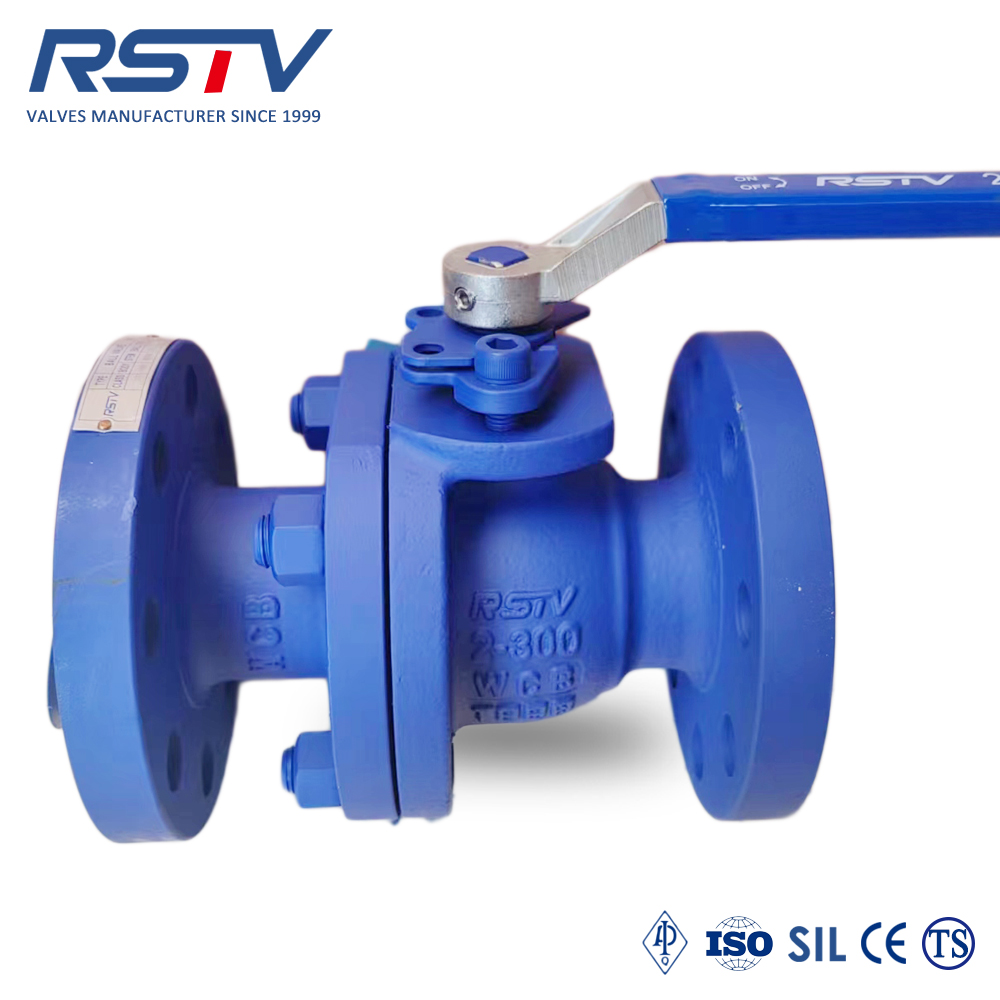
Petrochemical facilities operate under exceptionally harsh daily realities. Heavy pipelines transport raw hydrocarbons, highly toxic sour gas (H2S), and aggressive refining byproducts continuously. These abrasive and corrosive fluids degrade standard components rapidly. You need robust containment strategies to prevent catastrophic environmental releases and ensure worker safety.
Selecting a petrochemical ball valve requires strict adherence to global safety standards. Let us examine the essential compliance frameworks governing these volatile environments:
Fire-Safe Design (API 607 / API 6FA): Flammable media requires fail-safe mechanisms. Standard soft polymer seats will melt quickly during a facility fire. Fire-safe designs incorporate a secondary metal-to-metal seal. The internal ball shifts against a machined metal lip when the primary seat burns away. This critical feature prevents fuel from feeding the external fire.
Anti-Static Devices & Blowout-Proof Stems: Flowing fluids generate immense static electricity inside the pipeline. An internal anti-static spring grounds the ball directly to the valve body. This dissipates dangerous electrical charges safely into the earth. Additionally, blowout-proof stems load from the inside. They prevent sudden internal pressure spikes from ejecting the stem outward like a dangerous projectile. Both features represent absolute non-negotiables.
Fugitive Emissions Control: Regulatory bodies heavily penalize unseen atmospheric leaks. You must specify equipment meeting rigorous ISO 15848 or API 641 standards. These certifications ensure the advanced stem packing contains volatile organic compounds (VOCs) effectively over thousands of mechanical cycles. Facilities utilize helium leak testing to verify this microscopic containment.
Material shortlisting forms the next crucial engineering phase. Carbon steel (WCB) serves exceptionally well for standard, non-corrosive hydrocarbons. However, you must upgrade to Stainless Steel (CF8M) for moderate corrosivity and sub-zero temperature ranges. For highly aggressive, chloride-rich media, Duplex stainless steel alloys become strictly necessary. They resist localized pitting and stress corrosion cracking far better than any standard materials available.
Modern water processing requires highly specialized fluid control methodologies. We can divide facility needs into three primary categories. First, primary water intake systems handle massive volumes of raw, untreated fluids laden with debris. Second, chemical dosing lines manage highly concentrated liquid coagulants and pure chlorine. Finally, sludge discharge lines transport thick, abrasive biological waste away from the primary tanks.
Automation acts as the operational backbone of modern municipal and industrial treatment. Forward-thinking facilities are moving rapidly away from manual handwheels. Instead, engineers prioritize pneumatic or electric actuation. This allows seamless integration into centralized SCADA systems. An automated water treatment ball valve reacts instantly to changing flow metrics. It reduces costly manual labor and improves chemical dosing precision significantly.
Material and design assumptions dictate your ultimate operational success. Slurry and sludge lines demand full-bore designs exclusively. A full-bore internal diameter matches the connected pipe precisely. This prevents restrictive pressure drops. It also eliminates dangerous cavitation zones where abrasive particles destroy internal metal walls over time.
Chemical feed lines present a entirely different challenge. Highly corrosive dosing media quickly destroys standard carbon steel. Engineers often evaluate heavy-duty plastics like PVC or CPVC for these specific lines. Alternatively, they specify specialized coated metals for higher pressure dosing scenarios where plastic cannot survive.
Implementation carries specific risks you must mitigate early. Actuator sizing errors represent the most common engineering failure in this sector. Wastewater lines experience wildly fluctuating media density. Sludge thickness changes daily based on processing loads. If you calculate actuator torque based only on clean water, the motorized unit will stall entirely. You must size actuators generously to handle peak density resistance.
Choosing the correct industrial flange valve requires a highly structured engineering approach. You must map physical features directly to desired operational outcomes. We recommend utilizing a standardized evaluation matrix to remove guesswork from your procurement cycle.
Feature Category | Engineering Options | Operational Outcome |
|---|---|---|
Bore Size | Full vs. Reduced Bore | Full bore maximizes flow efficiency. Reduced bore saves space and lowers initial budget constraints. |
Seat Materials | PTFE, PEEK, or Metal | PTFE handles standard chemicals. PEEK survives extreme temperatures. Metal seats resist highly abrasive particles. |
Pressure Ratings | ANSI Class 150, 300, 600+ | Thicker flanges match true system peaks, preventing catastrophic blowout during sudden pressure surges. |
Bore sizing maps your flow efficiency needs directly against pipeline space constraints. Reduced bore models create minor flow restrictions but save significant structural weight on elevated pipe racks. Seat materials dictate your chemical and thermal endurance limits. Always match the polymer or metal seat to the precise fluid chemistry operating inside the pipe.
Furthermore, pressure ratings demand careful attention. You must match ANSI/ASME pressure classes to actual system peaks. Never select a class based solely on normal operating baselines. Water hammer effects and sudden pump surges exceed baseline metrics instantly. The extra flange thickness found on higher-class components absorbs these extreme mechanical shocks safely.
Scalability and standardization drive long-term plant efficiency. You must standardize valve models and body dimensions across your facility wherever physically possible. This strategy radically reduces your spare parts inventory. Consolidating your maintenance, repair, and operations (MRO) overhead simplifies training for your field maintenance staff. They learn one primary repair procedure instead of juggling dozens of varied brand requirements.
Even the best engineering designs fail due to poor installation practices. You must address common vulnerability points directly before system commissioning begins. Proper installation guarantees longevity.
Here are the primary installation risks you must watch out for during assembly:
Incorrect Flange Bolt Torqueing: Mechanics often over-tighten bolts unevenly in a rush. This action crushes the soft gasket on one side and creates an immediate leak path on the other. Always mandate the use of a calibrated torque wrench. Instruct teams to follow a strict star-pattern tightening sequence.
Uneven Gasket Compression: Reusing old, deformed gaskets or selecting the wrong thickness guarantees failure under high system pressure. Always install fresh, properly rated gaskets during every maintenance cycle.
Pipe Misalignment: Never use the high-strength valve bolts to pull stubbornly misaligned pipes together. This terrible practice transfers massive mechanical stress directly into the cast valve body. The internal ball will bind tightly against the seats, and the casting itself may eventually fracture.
Inline maintainability limits depend largely on the chosen body style. A traditional two-piece flanged body requires complete physical removal from the pipeline for internal repairs. Conversely, a three-piece design allows ultimate maintenance flexibility. You can simply unbolt the center section and swing it out. The heavy end flanges remain securely bolted to your pipe system. This intelligent design accelerates seat replacements significantly.
Predictive maintenance variables keep your critical systems online. Identify early warning signs before catastrophic failure occurs. A slight, unexplained increase in operating torque usually indicates seat swelling or severe surface scratching. Similarly, minor fluid weeping around the stem packing demands immediate adjustment. Addressing these tiny mechanical variations prevents major unexpected line shutdowns later.
Procuring the ideal fluid control equipment requires strict technical discipline. You must define your media properties comprehensively first. Next, determine the exact compliance standard required, whether it involves stringent API guidelines for petrochemicals or AWWA rules for municipal water processing. Then, size the pressure class accurately to accommodate unexpected system surges safely. Finally, select an actuation method matching your long-term automation goals.
Do not finalize your procurement based on simple marketing brochures alone. Always consult your manufacturers directly. Demand specific Material Test Reports (MTRs) to verify metal chemistry before accepting delivery. Request precise flow coefficient (Cv) data to guarantee your expected hydraulic performance. Taking these proactive engineering steps ensures absolute safety and guarantees robust fluid control reliability across your entire facility.
A: The primary difference lies in their maximum pressure-temperature ratings. Class 150 valves handle lower pressure systems, while Class 300 models withstand significantly higher pressures at elevated temperatures. Physically, Class 300 valves feature thicker flanges, heavier body castings, and larger bolt holes to safely contain the increased mechanical stress.
A: Yes, you can retrofit them easily if the valve includes an ISO 5211 direct mounting pad. This standardized pad allows you to bolt a pneumatic or electric actuator directly onto the body. You must verify the valve's breakaway torque beforehand to select an appropriately sized actuator.
A: The face-to-face dimension measures the exact physical distance between the two outer flange faces. Standardized measurements, like ASME B16.10, ensure valves from different manufacturers share identical lengths. This allows maintenance teams to swap brands easily without cutting or modifying the existing pipeline.
A: High pressure pushes a floating ball aggressively into the downstream seat, causing severe friction and rapid wear. A trunnion-mounted design secures the ball structurally at the top and bottom. This prevents the ball from drifting, absorbs the massive line pressure, and keeps operating torque remarkably low.


